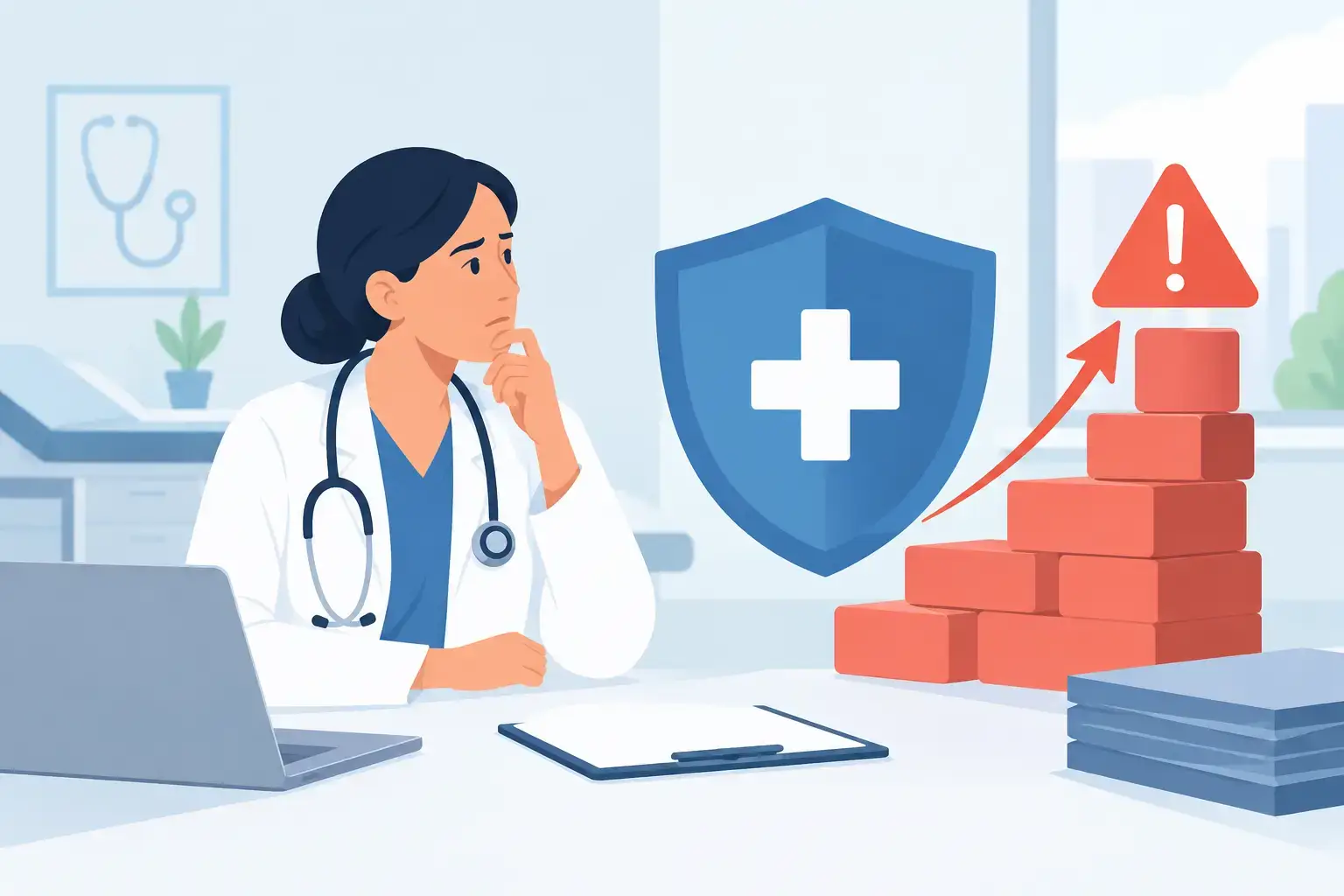
A claim can be paid, posted, and forgotten long before anyone asks whether the documentation, coding, authorization, or billing process could support it under scrutiny. That is how false claims risk develops in many medical practices: not necessarily through intentional misconduct, but through repeatable operational gaps that turn ordinary errors into a pattern.
For providers, the stakes are substantial. A payer audit, government inquiry, repayment demand, or whistleblower allegation can disrupt revenue, consume leadership attention, and place the organization’s reputation at risk. The strongest protection is not reacting faster after a finding arrives. It is building a defensible process before the claims are questioned.
What False Claims Risk Means for Healthcare Providers
False claims risk is the possibility that a healthcare organization submits, causes the submission of, or retains payment associated with claims that do not meet applicable billing, documentation, coverage, coding, or regulatory requirements. The risk can involve federal healthcare programs, commercial payers, managed care organizations, and state programs.
The False Claims Act is often central to the discussion, particularly when government program dollars are involved. But practices should not view exposure only through the lens of a formal False Claims Act case. Payer recoupments, extrapolated overpayments, prepayment review, network actions, and referral to oversight entities can create serious operational and financial consequences well before litigation is on the table.
Intent matters legally, but operationally, a practice should not wait to debate intent before acting. A recurring documentation deficiency or unsupported billing pattern may be interpreted very differently once a payer identifies that leadership had prior notice and did not correct the problem. The question is not merely whether a claim was paid. It is whether the practice can explain and support why it was submitted.
Where False Claims Risk Usually Begins
High-risk claims processes are rarely limited to one person or department. They often emerge at the handoff points between clinical care, documentation, charge capture, coding, billing, credentialing, and payment posting. Each team may perform its individual task reasonably well while the overall process still produces claims that are difficult to defend.
Documentation is a frequent pressure point. A medical record may reflect that care occurred, yet fail to establish medical necessity, support the reported level of service, identify the rendering provider correctly, or document required elements of a procedure. Templates can increase consistency, but copied-forward text, preselected findings, and generic narratives can also make records appear disconnected from the patient’s actual encounter.
Coding and charge capture present another common source of exposure. Examples include services billed at a higher level than supported, unbundled services, modifier misuse, incident-to billing that does not meet supervision or eligibility requirements, and billing for services performed by individuals whose enrollment or credentials do not support the claim. These issues can arise from outdated guidance, productivity pressure, incomplete training, or software configurations that no one has recently tested.
The risk also extends beyond claim submission. Identified overpayments require disciplined investigation and timely action. A practice that receives credible information about a potential billing error, then allows the matter to remain unresolved, can create additional exposure. Payment integrity requires a process for receiving concerns, investigating them, quantifying impact, correcting claims where appropriate, and documenting the organization’s response.
Why Isolated Errors Can Become a Pattern
No healthcare organization eliminates every billing error. Auditors understand that. What elevates concern is evidence that an issue was systemic, repeated, or ignored after the practice had reason to know about it.
Consider a recurring evaluation and management coding issue. If internal review identifies a small number of unsupported higher-level claims and the practice provides focused education, validates improvement, and adjusts its workflow, that response demonstrates active compliance management. If the same issue appears across providers and months with no documented correction, an auditor may reasonably ask whether the practice’s controls were adequate.
Patterns are also created by a lack of ownership. When clinical leadership assumes billing will catch documentation problems, and billing assumes clinicians will self-correct, unsupported claims can continue moving through the revenue cycle. Effective compliance requires clear accountability for each stage of the process, including who has authority to pause a claim, escalate a concern, approve corrective action, and verify that remediation worked.
A Practical Framework for Reducing False Claims Risk
Risk reduction should be targeted, evidence-based, and proportionate to the practice’s services and payer mix. Generic annual training has value, but it does not replace testing actual claims and records against the requirements that apply to the organization.
Start with a focused risk assessment
A meaningful assessment looks at where the practice is most exposed, not simply whether policies exist. High-volume and high-dollar services deserve attention, as do services with complicated coverage rules, significant modifier use, frequent denials, or a history of payer questions. Changes in staffing, new service lines, acquisitions, enrollment updates, and electronic health record changes should also trigger review.
The assessment should compare the record, the coded claim, and the payment logic. Reviewing only documentation may miss billing edits or enrollment issues. Reviewing only claims data may miss the clinical context needed to determine whether a service was supported.
Test records before an auditor does
Routine quality assurance reviews provide a clearer picture than a one-time compliance exercise. Sampling should be statistically thoughtful enough to identify trends while also being practical for the practice’s size and risk profile. The purpose is not to create a punitive scorecard for providers. It is to identify whether the organization can substantiate the claims it is submitting.
Review findings should distinguish among education opportunities, isolated errors, and systemic deficiencies. That distinction affects the response. A single missing signature may call for an individual correction and education. A workflow that routinely allows unsigned or incomplete records to bill requires a process redesign, stronger edits, and follow-up validation.
Correct the process, not just the chart
A retrospective correction without operational change offers limited protection. If a review identifies a problem, the practice should determine its root cause: unclear policy, flawed template design, inadequate training, insufficient supervision, coding configuration, staffing constraints, or weak claim edits.
Corrective action should be specific. It may include revised documentation standards, targeted clinician education, coding edits, pre-bill review for designated services, enrollment verification, or enhanced oversight of delegated billing functions. The practice should then test whether the corrective action actually reduced the error rate. A corrective action plan is most defensible when it shows what was found, why it occurred, what changed, who owned the change, and how effectiveness was measured.
Maintain a disciplined overpayment process
Potential overpayments should be investigated promptly and consistently. The response should preserve the facts, define the affected universe, determine whether additional sampling or a broader review is needed, and document the basis for repayment or any conclusion that repayment is not required.
The correct scope depends on the issue. Expanding a review too quickly can create unnecessary disruption, while a narrow review may fail to address a credible systemic concern. This is where experienced guidance matters. The organization needs a defensible rationale for its methodology, conclusions, and corrective steps.
Preparing for Payer and Government Scrutiny
When an audit notice or records request arrives, the instinct to respond immediately is understandable. Yet speed without control can create avoidable problems. Practices should first confirm the request’s scope, deadline, authority, requested record types, and submission requirements. They should also establish a single response process so records, explanations, and communications remain consistent.
Do not alter records after receiving an audit request. Legitimate late entries or addenda may be appropriate when they comply with recordkeeping standards and accurately identify the author, date, and purpose, but they should never be used to recreate support that was absent at the time of service. The distinction is critical.
Before submitting records, conduct a structured review of what the documentation and claim do – and do not – establish. Identify potential vulnerabilities early, preserve supporting information, and avoid speculative explanations. If findings are issued, evaluate the methodology, the cited requirements, the extrapolation approach if used, and the evidence supporting each conclusion. An audit finding is not automatically final simply because it is issued.
Praevera Risk Associates helps providers approach this work from both sides of the scrutiny process: understanding the operational realities of care delivery while evaluating how an auditor, payer, or oversight entity may interpret the record. That perspective supports a response grounded in facts, defensibility, and the practice’s long-term interests.
The Goal Is Defensible Integrity
False claims risk cannot be managed through policies that sit unused or by assuming clean intentions will resolve documentation problems. It is managed through a repeatable discipline of testing, correcting, monitoring, and responding with purpose.
A practice that can show how it identifies risk, investigates concerns, corrects verified issues, and validates improvement is in a stronger position when scrutiny arrives. Prepare with confidence by treating every review as an opportunity to protect reimbursement, preserve credibility, and reinforce the integrity of the care your organization provides.