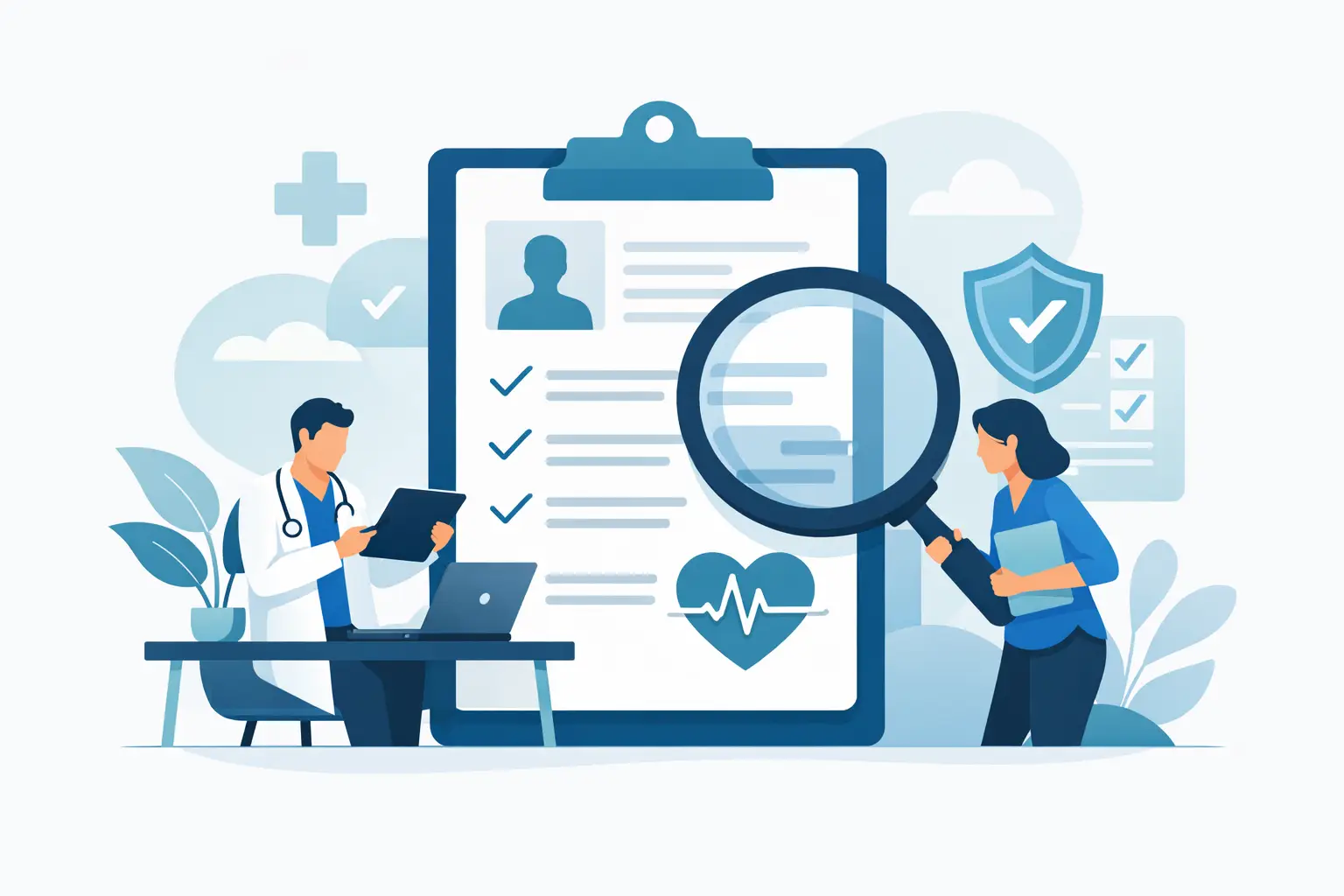
A denied claim rarely starts with billing. More often, it starts months earlier in the medical record, when the documentation does not fully support the level of service, medical necessity, or clinical decision-making behind what was reported. That is why a provider documentation integrity review is not just a chart exercise. It is a risk control function that protects reimbursement, supports compliance, and gives leadership a clearer view of where scrutiny is likely to land.
For healthcare practices facing payer pressure, evolving coding expectations, and increasing fraud, waste, and abuse oversight, documentation integrity has moved from a back-office concern to an enterprise issue. If the record cannot stand on its own, the claim is exposed. If the pattern repeats, the organization is exposed.
What a provider documentation integrity review actually examines
A provider documentation integrity review evaluates whether the clinical record accurately, consistently, and defensibly supports the services billed. That sounds straightforward, but in practice it requires more than checking whether a note is signed and complete. The review looks at the relationship between the patient encounter, the provider’s assessment, the treatment plan, the codes submitted, and the regulatory standards that govern payment.
That includes medical necessity, internal consistency, specificity, timeliness, authorship, and whether the note reflects the true complexity of the visit. It also examines whether repeated templates, cloned language, or generic phrasing create doubt about the authenticity or individualized nature of care. A note can appear complete and still fail under review if it does not clearly support why the service was reasonable, necessary, and accurately coded.
In many organizations, documentation problems do not come from intentional misconduct. They come from workflow shortcuts, EHR habits, inconsistent provider education, or pressure to close encounters quickly. Those realities matter, but they do not reduce exposure when an auditor reviews the file.
Why provider documentation integrity review matters before an audit
The worst time to evaluate documentation integrity is after findings arrive. Once a payer, contractor, or government reviewer identifies a pattern, the conversation changes. The practice is no longer asking whether there is risk. It is trying to contain repayment, limit escalation, and explain how the issue developed.
A proactive provider documentation integrity review changes that posture. It gives leaders the chance to identify weaknesses before an outside party does. It can reveal whether a problem is isolated to one specialty, one code family, one provider, or one workflow. That distinction matters because the corrective response should match the cause.
For example, weak assessment and plan language may require provider education. Unsupported modifier use may point to coding oversight. Repeated inconsistencies between rendered services and billed claims may indicate a broader operational breakdown. Treating all of these issues as generic compliance problems usually leads to generic fixes, and generic fixes do not hold up well under repeat scrutiny.
Practices also need to recognize the financial side of the equation. Poor documentation can lead to underbilling as easily as overbilling. Some providers fail to capture the true complexity of care because their notes are too brief, too vague, or too disconnected from the coding submitted. Integrity is not only about avoiding overpayment exposure. It is about making sure the record accurately reflects the work performed.
Common findings in a provider documentation integrity review
Certain patterns appear repeatedly across chart reviews, even in otherwise well-run organizations. Medical necessity is often implied but not stated clearly enough to withstand external review. The diagnosis may be listed, but the note does not explain why the service level was warranted. In other cases, the history, exam, and decision-making do not align in a way that supports the code billed.
Template overuse is another common issue. Templates can improve efficiency, but they also create risk when they introduce irrelevant content, identical language across unrelated encounters, or documentation that suggests a service was performed when it was not meaningfully addressed. Auditors are trained to spot those patterns.
Addenda and late entries also deserve careful attention. They are sometimes appropriate, but when they appear defensive, inconsistent, or poorly timestamped, they can weaken credibility rather than strengthen it. The same is true of copied forward problem lists, auto-populated review systems, and signatures that do not clearly establish authorship.
Then there is the mismatch problem. The claim, diagnosis coding, treatment order, and clinical note may each look plausible on their own, but when reviewed together they tell different stories. That kind of inconsistency is exactly what invites deeper scrutiny.
What an effective review process should include
A credible review process should not stop at isolated chart comments. It should identify risk patterns, measure defensibility, and connect findings to operational realities. That means looking at samples large enough to reveal trends, but focused enough to support action.
The strongest reviews combine clinical, coding, and audit logic. They assess not only whether the note supports the code, but also how an external reviewer is likely to interpret the record. That distinction is critical. Internal teams sometimes give the provider the benefit of context that does not appear in the chart. Auditors do not.
An effective process also separates technical deficiencies from material risk. Not every documentation issue carries the same weight. A missing element that does not affect medical necessity is different from a pattern of unsupported services. Leadership needs that level of prioritization so resources can be directed where the exposure is highest.
The review should also result in provider-specific and workflow-specific recommendations. Broad reminders to document better rarely change behavior. Practical guidance tied to actual chart findings is more likely to improve future records and reduce repeat errors.
Documentation integrity is not the same as coding accuracy
Organizations often assume that if coding has been reviewed, documentation integrity has been addressed. That assumption creates blind spots. Coding review and documentation review overlap, but they are not interchangeable.
Coding accuracy asks whether the codes submitted match the documented service. Documentation integrity asks whether the underlying record is complete, credible, individualized, timely, and defensible under audit standards. A claim can be coded consistently with the note and still fail an audit because the note itself does not adequately support medical necessity or the level reported.
This is where many practices get surprised. They may have had coding feedback, denial management processes, and periodic education in place, yet still face findings because the deeper documentation framework was never tested from an enforcement perspective. That is one reason specialized review matters.
When to conduct a provider documentation integrity review
There is no single trigger that fits every organization. For some practices, the right time is before expansion into higher-risk service lines or payer contracts. For others, it is after a spike in denials, a utilization outlier report, a whistleblower concern, or early audit correspondence.
It is also wise to act when leadership sees warning signs that are easy to rationalize away, such as unusually similar notes, repeated unsupported modifiers, provider variation that cannot be clinically explained, or chronic disagreement between coding and clinical staff. Those signals often point to issues that are broader than individual charts.
A review is especially valuable after external findings, but the goal should be more than rebuttal. It should be to understand the root cause, evaluate whether the issue extends beyond the sampled claims, and build a corrective action plan that can be defended if scrutiny continues.
Turning findings into protection
A review has limited value if it ends with a report and no structural follow-through. The real benefit comes from translating findings into action that can withstand future review. That may involve provider education, revised templates, coding edits, escalation pathways, focused monitoring, or changes in how compliance and operations share accountability.
The right corrective action depends on the nature of the problem. If the issue is knowledge-based, education may help. If it is process-based, training alone will not fix it. If compensation design or productivity pressure is driving risky documentation behavior, the response has to address those incentives directly.
This is where strategic support matters. Practices need more than commentary on what was wrong. They need guidance on what is defensible, what is fixable, what requires repayment analysis, and what must be monitored over time. Praevera Risk Associates approaches this work with that broader lens, grounded in both enforcement logic and provider operations.
A strong record does more than support a claim. It protects the clinical story, the provider’s credibility, and the organization’s ability to respond with confidence when questions arise. If your documentation would be difficult to explain to someone outside the practice, that is the signal to review it now, while you still control the timeline.